Highlights:
- Dhanteras is associated with prosperity, good health, and the tradition of buying gold, silver, and other precious items.
- In 2025, India's gold sales volume during Dhanteras fell by 10–15% compared with 2024.
- Understanding the significance of gold buying, checking prices, and planning festive expenses can help families make more informed decisions.
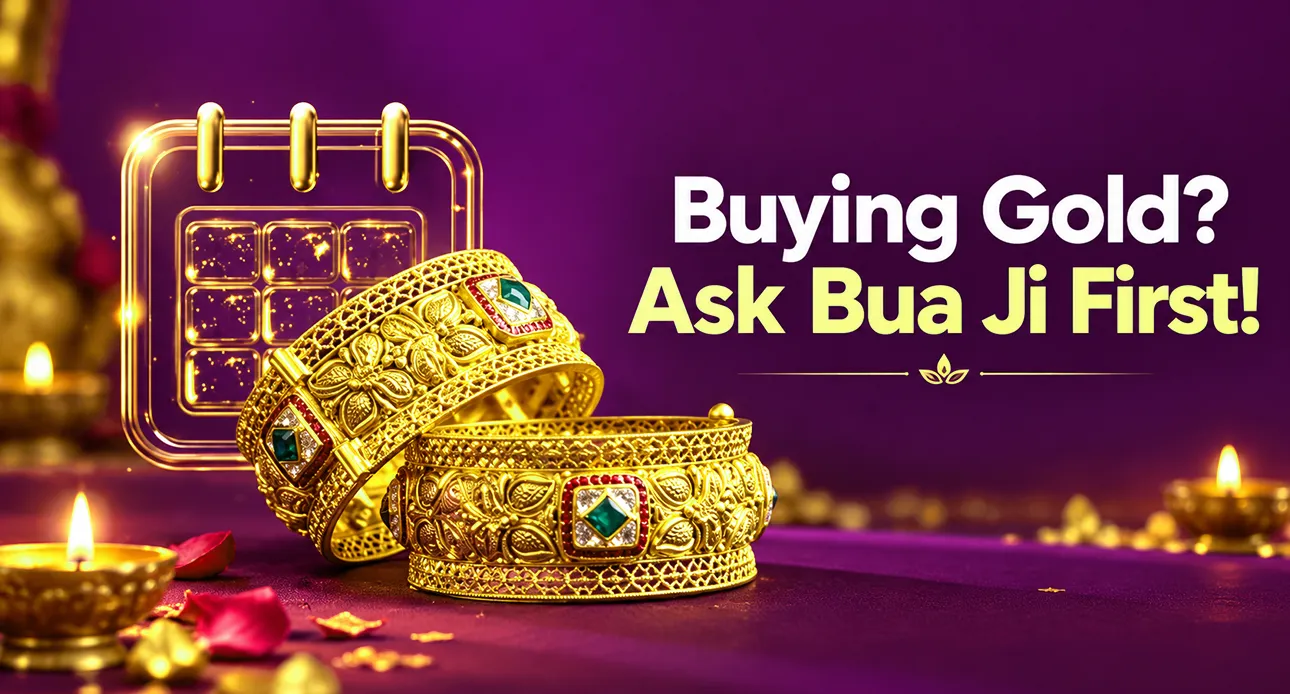
Every family has one person who starts planning Dhanteras shopping weeks in advance. They know which jeweller to visit, remember last year's gold prices, and have already decided whether this year's purchase should be a gold coin, a silver utensil, or a new piece of jewellery. In many homes, that person is Bua Ji.
But have you ever wondered why buying gold on Dhanteras is considered so important? Is it simply a family tradition, a religious belief, or a way to preserve wealth?
The answer goes back centuries, combining Hindu mythology, cultural customs, and gold's place in Indian households. In this blog, we'll explore why gold is bought on Dhanteras, the stories behind the tradition, what recent gold-buying trends reveal, and how families can plan their festive spending wisely.
Why Is Dhanteras Celebrated?
Dhanteras marks the beginning of the five-day Diwali festival. Also known as Dhan Trayodashi, it falls on the thirteenth day of Krishna Paksha in the Hindu lunar month of Ashwin.
The festival is associated with Lord Dhanvantari, who is linked to health and Ayurveda, Goddess Lakshmi, who represents wealth and prosperity, and Lord Kuber, who is associated with riches.
According to Hindu mythology, Lord Dhanvantari emerged during Samudra Manthan, the churning of the cosmic ocean, carrying a pot of amrit, or nectar of immortality. This connection explains why the festival is associated with health, well-being, and longevity.
Over time, buying precious metals and other new items became an important Dhanteras tradition. Many families purchase gold, silver, utensils, or household goods as a symbolic way of welcoming prosperity into their homes.
For some, it is a religious observance. For others, it is a family custom passed down through generations. Often, it is both.
Also Read: Rangoli, Diyas, Lights: What a Perfect Diwali Home Costs in 2026
Why Do Indians Buy Gold on Dhanteras?
Gold holds a special place in Indian households. It is commonly associated with weddings, family celebrations, gifts, and long-term savings. Dhanteras brings these cultural and financial associations together.
Buying gold on this day is widely considered auspicious. Many families believe that bringing home precious metals symbolises good fortune and prosperity for the year ahead.
However, the appeal of gold goes beyond tradition. Unlike many purchases made during the festive season, gold is often viewed as something that can retain value over time. Jewellery and coins may also be passed down through generations, giving them emotional significance alongside their monetary value.
The scale of this tradition is reflected in India's gold market. A World Gold Council report on India's gold market notes that approximately 40–60 tonnes of gold are sold during Dhanteras and Akshaya Tritiya combined in a typical year. The report also highlights the importance of festivals as occasions for gold purchases.
This helps explain why jewellers see Dhanteras as a major shopping event every year, even when gold prices are high.
Dhanteras Gold Buying in 2024 vs 2025: What Changed?
Gold prices have a direct influence on how families approach festive shopping. When prices rise sharply, buyers may change what they purchase, how much they spend, or whether they choose jewellery or coins.
The Dhanteras seasons of 2024 and 2025 offer a useful example.
| Gold market trend | Dhanteras 2024 | Dhanteras 2025 |
| Reported gold price | ₹79,775 per 10 grams at the festive-period peak | ₹1,32,294 per 10 grams at the reported record high |
| Gold sales volume | Baseline for comparison | Fell by 10–15% year on year |
| Jewellery demand | Strong festive interest despite higher prices | Fell by nearly 30% year on year |
| Buying preference | Jewellery, coins, and bars | Greater preference for coins and bars |
In 2024, gold prices reached ₹79,775 per 10 grams, nearly 33% higher than a year earlier. Despite the increase, festive demand remained healthy, although buyers purchased lower volumes.
By Dhanteras 2025, the reported price had climbed to ₹1,32,294 per 10 grams, more than 60% above the previous year's festive-period level. Reuters reported that gold sales volume fell by 10–15%, while jewellery demand declined by nearly 30%. Buyers increasingly favoured coins and bars over jewellery, which generally carries additional making charges.
These figures reveal an important distinction: higher gold sales value does not necessarily mean people bought more gold. Rising prices can increase the total amount spent even when the quantity purchased falls.
For families planning their annual purchase, this makes checking current prices and deciding on a budget especially important.
What Can You Buy on Dhanteras Besides Gold?
Gold may be the most talked-about purchase, but it is not the only way families observe Dhanteras.
Silver coins, utensils, traditional diyas, and new household items are also popular choices. Some families purchase appliances or other useful products they have been planning to buy for months.
The right purchase depends on personal preferences, family customs, and affordability. There is no need to stretch your finances simply because a particular item is traditionally associated with the festival.
If you are buying gold jewellery, check its purity, hallmarking, making charges, and final price. If you are considering coins or bars, compare the price and buy-back terms offered by reputable sellers.
Most importantly, distinguish between buying something because it holds personal or cultural value and buying it because you expect its price to rise. Gold prices can fluctuate, and past performance does not guarantee future returns.
Also Read: Smart Diwali Shopping: How to manage expense during Festive Sale
How Can You Manage Dhanteras and Diwali Expenses?
Festive spending rarely stops at one purchase. Along with gold or silver, families may budget for clothes, gifts, sweets, decorations, travel, and celebrations.
Planning these expenses in advance can help you enjoy the occasion without putting pressure on essential bills or savings. Start by deciding how much you can comfortably spend, then divide that amount across your planned purchases.
If an unexpected expense arises, review your available savings before considering borrowing. For those who need additional financial flexibility, Viva Money's Super Flexi Loan offers instant funds up to ₹2,00,000 at 0% interest for up to 51 days. Borrow as per your needs and manage your expenses with ease.
The idea is not to spend more during the festive season, but to make room for celebrations while keeping your finances in order.
Conclusion
Dhanteras is much more than an occasion to buy gold. It brings together faith, family traditions, and the hope of prosperity. For some households, that means purchasing a gold coin. For others, it means buying something useful for the home or simply gathering for prayers.
And while Bua Ji may have her own tried-and-tested gold plan, the most meaningful purchase is one that respects both tradition and your financial comfort.
After all, welcoming prosperity should not mean putting your financial peace of mind at risk. A thoughtful plan can help you celebrate Dhanteras with confidence, whatever you choose to bring home.
FAQs
1. Why is gold bought on Dhanteras?
Gold is bought on Dhanteras because it is traditionally associated with wealth, prosperity, and good fortune. Many families believe that purchasing gold or silver on this day symbolises welcoming abundance into their homes.
2. Why is Dhanteras celebrated before Diwali?
Dhanteras marks the beginning of the five-day Diwali festival. It is associated with Lord Dhanvantari, Goddess Lakshmi, and prayers for health, wealth, and prosperity.
3. Is it necessary to buy gold on Dhanteras?
No, buying gold is a tradition, not a religious obligation. Families may purchase silver, utensils, or other useful items, or simply celebrate the day through prayers and rituals.
4. Is buying gold on Dhanteras a good investment?
Gold can be a way to diversify long-term savings, but its price fluctuates, and returns are not guaranteed. Before buying, consider your budget, the purchase costs, and your financial goals rather than relying only on the auspicious occasion.
5. How can I manage Diwali expenses without overspending?
Make a list of expected expenses, set a realistic budget, compare prices, and keep some money aside for unexpected costs. If you consider borrowing to cover a shortfall, check the applicable interest, fees, and repayment terms before making a decision.